“Should we spend our ad budget on Google or on Facebook and Instagram?” It’s one of the questions we hear most from business owners. And the honest answer is that it depends on what you sell, who buys it and how they look for it.
Both platforms can bring you customers profitably. Both can also burn through your money fast if they’re set up badly. This guide explains how each one works, where each one shines and how to decide where your first dollar should go.
The key difference: searching vs scrolling
The easiest way to understand the two platforms is to think about what people are doing when they see your ad.
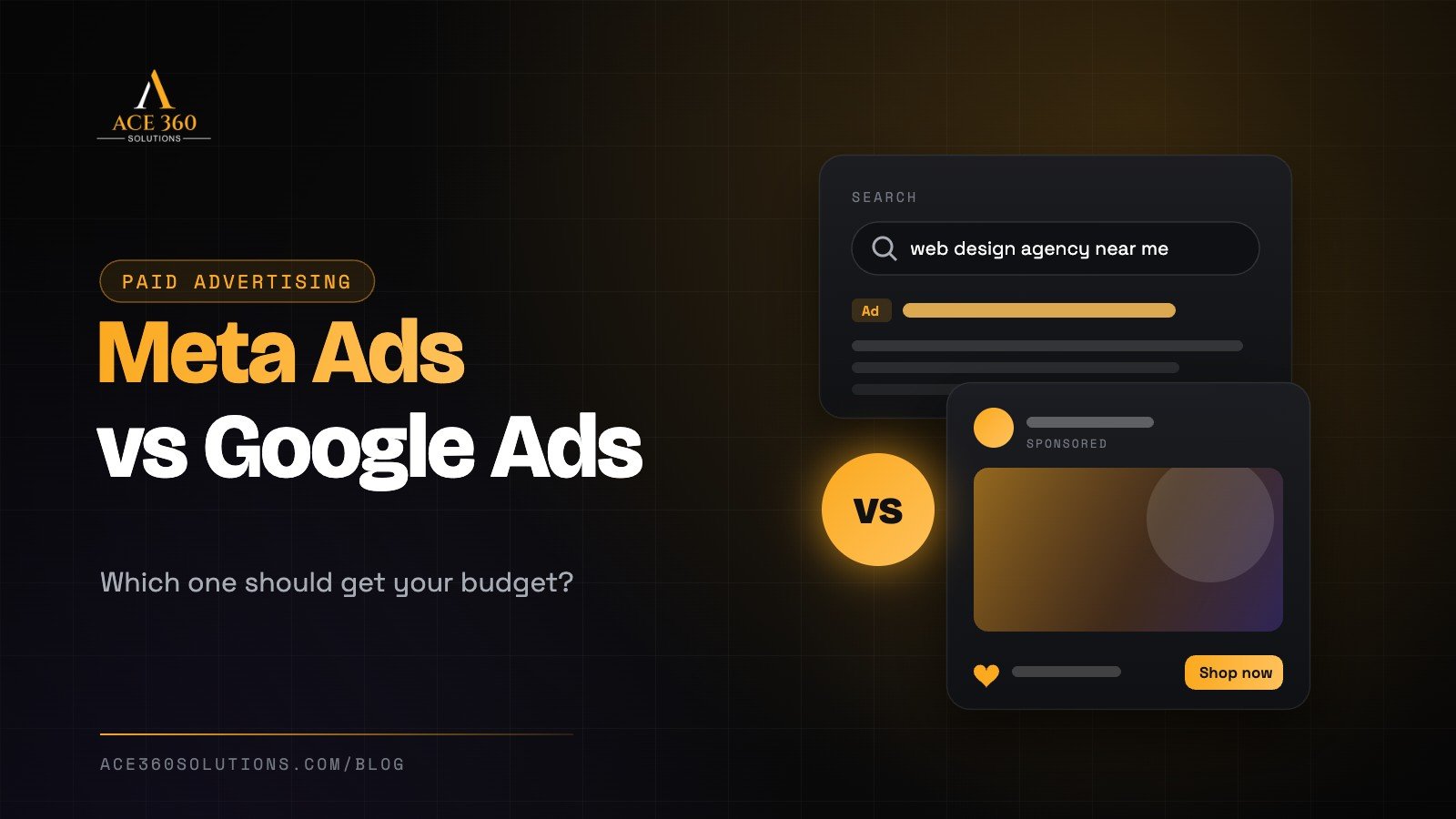
- Google Ads reaches people while they’re searching. Someone types “emergency plumber near me” or “buy running shoes online”, and your ad appears. They already want something, and you’re offering it.
- Meta Ads (Facebook and Instagram) reach people while they’re scrolling. They weren’t looking for you, but your ad catches their attention because it matches their interests, behaviour or profile.
In marketing terms, Google captures existing demand, while Meta creates new demand. Once you understand that, most decisions become much easier.
When Google Ads is the better choice
Google Ads usually works best when people already know they need what you offer and search for it. It’s especially strong for:
- Local and emergency services: plumbers, locksmiths, dentists, lawyers and repair services, where people search when they have a problem right now.
- High intent purchases: people searching for a specific product, brand or service with words like “buy”, “price”, “best” or “near me”.
- B2B services: software, agencies and professional services where buyers research on Google before contacting anyone.
- Ecommerce with Shopping ads: showing your products, prices and images directly in Google search results.
The trade off is cost. In competitive industries, clicks can be expensive, because you’re bidding against everyone else who wants the same customers. That’s why good keyword choice and tight targeting matter so much.
When Meta Ads is the better choice
Meta Ads work best when your product is visual, easy to understand quickly and something people might buy on impulse or discover for the first time. They’re especially strong for:
- Ecommerce brands: fashion, beauty, home products, gifts, food and lifestyle products.
- New products or ideas: things people don’t know to search for yet.
- Building awareness: getting your brand in front of a large, relevant audience.
- Retargeting: reminding people who visited your website or engaged with your page to come back and buy.
- Lead generation: collecting enquiries with simple forms for events, courses, real estate and local services.
Clicks are often cheaper than on Google, but the audience is colder. People need more convincing, so strong creative, clear offers and good landing pages matter a lot.
Meta Ads vs Google Ads at a glance
| Factor | Google Ads | Meta Ads |
|---|---|---|
| How people find you | They search for it | They discover it while scrolling |
| Buyer intent | High | Lower, but builds interest |
| Best for | Services, urgent needs, high intent products | Visual products, new brands, awareness, retargeting |
| Ad format | Text, shopping, display and YouTube | Images, videos, carousels, stories and reels |
| Typical cost per click | Often higher in competitive industries | Often lower |
| Targeting | Keywords, location and search intent | Interests, behaviour, demographics and lookalike audiences |
| What makes it work | Keyword strategy and landing pages | Creative, offer and audience testing |
What about budget?
You don’t need a huge budget to start, but you do need enough to collect useful data. If you spread a small budget across too many campaigns, nothing gets enough results to learn from.
A few practical rules we follow:
- Start with one platform and one clear goal, such as sales, calls or form enquiries.
- Set up conversion tracking before you spend anything. Without it, you’re guessing.
- Give campaigns enough time to learn. Judging results after two days usually leads to bad decisions.
- Scale what works and switch off what doesn’t, based on cost per lead or return on ad spend, not clicks or likes.
Can you use both?
Yes, and many businesses get the best results this way. A common approach is to use Meta Ads to introduce your brand to new people and Google Ads to capture them when they later search for you or your product. Retargeting on both platforms then reminds visitors who didn’t buy the first time.
If your budget is limited, though, it’s usually better to do one platform well than two platforms badly.
Common mistakes on both platforms
- Sending traffic to your homepage: send people to a page that matches the ad they clicked.
- No conversion tracking: if you can’t see which ads bring sales or leads, you can’t improve them.
- Targeting everyone: broad targeting without a clear audience wastes money fast.
- Weak landing pages: a slow or confusing website will waste even the best ad.
- Setting and forgetting: ads need regular checks, testing and optimisation.
So which one should you choose?
Here’s a simple way to decide:
- If people already search for what you offer, start with Google Ads.
- If your product is visual, new or impulse friendly, start with Meta Ads.
- If you have enough budget and good tracking, use both together, each for what it does best.
Planning ads for the busiest weekend of the year? Our Black Friday 2026 checklist covers how to time your budget, retargeting and email campaigns.
Need help running profitable ads?
Ace 360 Solutions plans, builds and manages Meta and Google Ads campaigns focused on real business results: sales, leads and return on ad spend. We also make sure your landing pages are ready to convert, because great ads only work when the website does too. Explore our Meta and Google Ads management, or book a free strategy call and we’ll tell you which platform makes sense for your business.
Frequently asked questions
Is Google Ads or Facebook Ads cheaper?
Facebook and Instagram clicks are often cheaper, but cheaper clicks don’t always mean cheaper customers. Google traffic usually has higher intent, so it can convert better. What matters is your cost per sale or lead, not your cost per click.
How much should I spend on ads when starting out?
Start with a budget you can afford to test with for at least a few weeks. It needs to be large enough to get regular clicks and conversions so the platform can learn and you can make decisions based on real data.
How long does it take to see results from paid ads?
You can start getting clicks on the first day. Reliable results usually take a few weeks while campaigns gather data, audiences are tested and the platforms optimise delivery.
Do I need a website to run ads?
Not always. Meta lead forms and Google call ads can work without one. But a fast, clear website or landing page almost always improves results and builds trust.

admin
Part of the Ace 360 Solutions team — helping brands grow with high-performance websites, SEO and paid media.