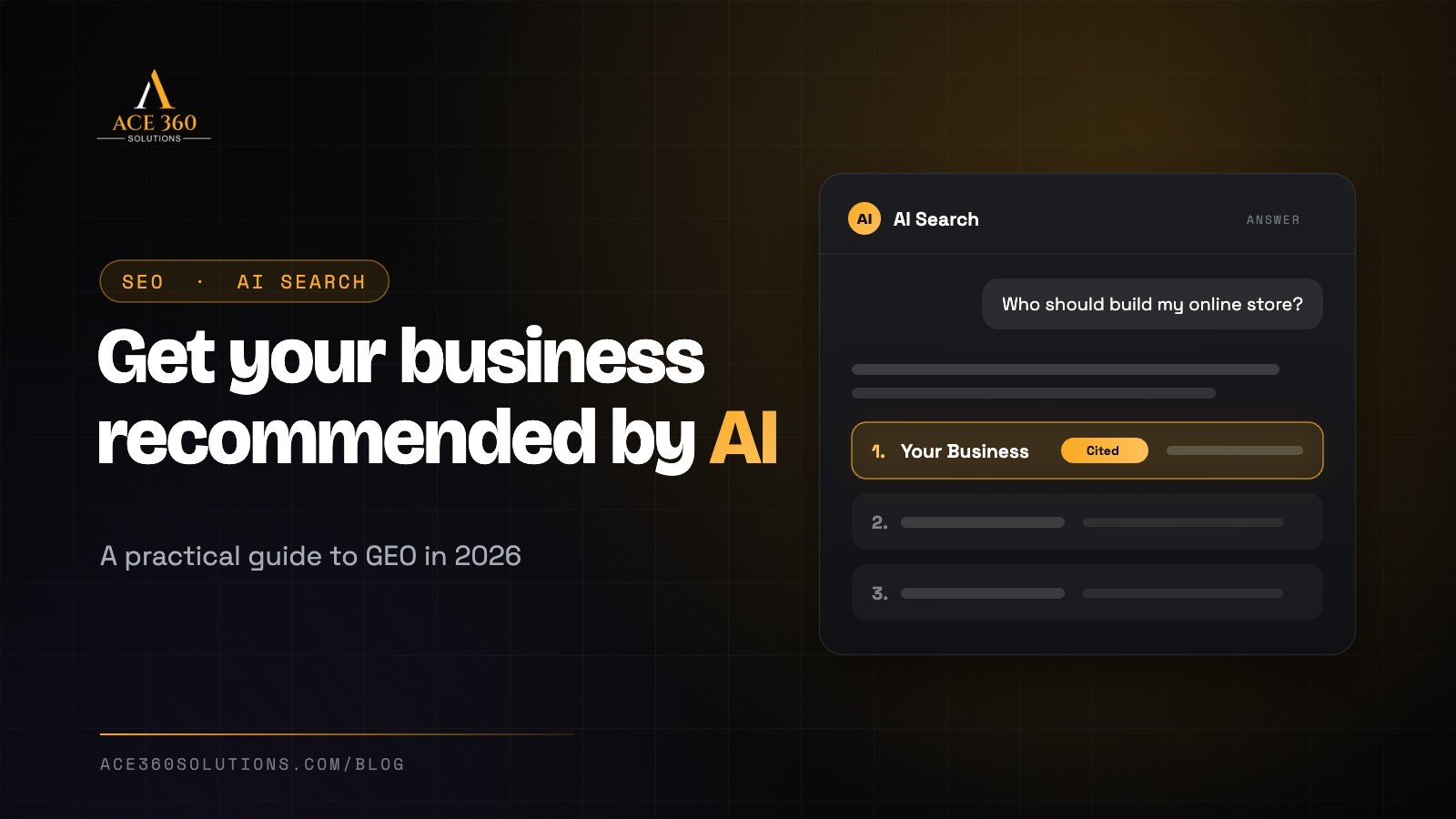
Not long ago, getting found online meant one thing: ranking on page one of Google. Today, a growing number of people ask ChatGPT, Gemini or Google’s AI Overviews and AI Mode for recommendations instead. “What’s the best web design agency for a small business?” “Which dentist near me is good with nervous patients?” The AI gives an answer, often naming a few businesses, and many people never scroll further.
So the question for every business owner in 2026 is simple: when someone asks an AI tool about what you do, does your business get mentioned?
This is what people now call generative engine optimization, or GEO. It sounds new and technical, but most of it builds on good SEO. This guide explains how AI search works and what you can do to give your business the best chance of being recommended.
What is generative engine optimization (GEO)?
Generative engine optimization means making your website and online presence easy for AI tools to find, understand, trust and quote. Traditional SEO aims to rank a page in a list of links. GEO aims to have your business, your content or your advice included in the answer an AI tool writes.
The two work together. AI search tools still rely heavily on the web, and many of them pull information from pages that already rank well in traditional search. A strong SEO foundation is the starting point for GEO, not something it replaces.
How AI search tools choose what to mention
Nobody outside these companies knows the exact rules, and they change often. But the patterns are fairly clear. AI tools tend to favour sources that:
- Answer the question clearly and directly
- Show real expertise and experience
- Are mentioned and trusted across many other websites
- Have consistent, accurate information about the business
- Are easy for crawlers to access and understand
- Are up to date
Google has also been adding more visible links inside AI Mode and AI Overviews, which means being cited can send real visitors to your website, not just brand awareness.
1. Make sure AI crawlers can reach your site
If AI tools can’t read your website, they can’t recommend it. Check that your robots.txt file and any security or firewall settings aren’t blocking legitimate search and AI crawlers by accident. Make sure your important pages load as real text, not only inside images or scripts that crawlers struggle with. And submit your sitemap in Google Search Console and Bing Webmaster Tools, since several AI tools use search engine indexes behind the scenes.
2. Answer real questions clearly
AI tools are answering questions, so give them clear answers to work with. Look at the questions your customers ask you on calls, emails and in person, then answer them on your website.
- Start key pages and sections with a short, direct answer, then add detail.
- Use headings that match real questions, such as “How much does a website redesign cost?”
- Add an FAQ section to service pages and blog posts.
- Use plain language. Clear writing is easier for both people and AI to understand.
3. Show real experience and expertise
Generic content is everywhere now, and AI tools have plenty of it to choose from. What stands out is content that shows real experience: your process, your opinions, examples from your work, the mistakes you see clients make and the results you’ve achieved. Put names and faces behind your content with author bios and an honest About page. This is the same kind of expertise and trust that Google’s quality guidelines have emphasised for years.
4. Build mentions beyond your own website
AI tools don’t just read your website. They look at what the rest of the internet says about you. A business that is mentioned positively across many trusted sources is far more likely to be recommended.
- Keep your Google Business Profile complete and active. Our local SEO guide walks through it step by step.
- Collect genuine reviews on Google and the review sites that matter in your industry.
- Get listed in relevant directories and industry associations.
- Contribute expert comments to local news, podcasts and industry blogs.
- Take part in genuine discussions on communities like Reddit, LinkedIn and Quora where your customers ask questions. Be helpful, not salesy.
5. Keep your business information consistent
If your services, prices, location or contact details are different on your website, Google profile and directory listings, AI tools may get confused or describe you incorrectly. Make sure your business name, address, phone number, services and opening hours match everywhere. Use structured data (schema markup) on your website to describe your business, services, reviews, products and FAQs in a format machines understand easily.
6. Create content AI tools want to quote
Some types of content are especially likely to be cited:
- Original data: survey results, benchmarks from your own work or useful statistics with clear sources.
- Clear comparisons: “X vs Y” articles that explain differences fairly. Our guide to Shopify vs WordPress is an example of this format.
- Step by step guides and checklists: practical, structured content that answers “how do I” questions.
- Definitions: simple explanations of terms in your industry.
7. Keep your content fresh
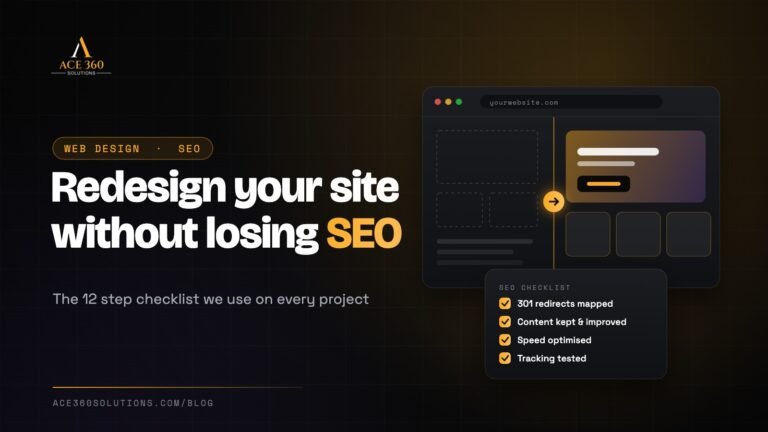
AI tools often prefer current information, especially for topics that change quickly. Review your most important pages regularly, update outdated advice, prices and examples, and show the date you last reviewed key content. If you’re planning a full website refresh, follow a careful process so you don’t lose the visibility you already have. Our website redesign SEO checklist covers exactly that.
8. Track your AI visibility
Measuring AI search is still harder than measuring traditional SEO, but you can start simply:
- Ask ChatGPT, Gemini, Perplexity and Google AI Mode the questions your customers would ask, and note whether you’re mentioned.
- Look for referral visits from AI tools in your analytics. Some AI traffic may show up as direct traffic, because not every tool passes referral information.
- Watch Google Search Console and Bing Webmaster Tools for changes in impressions and clicks on question style searches.
- Ask new customers how they found you. “ChatGPT recommended you” is a surprisingly common answer now.
GEO mistakes to avoid
- Publishing large amounts of thin AI written content. Google has continued to roll out spam updates targeting low value content at scale.
- Trying to trick AI tools with hidden text or keyword stuffing. These tactics tend to backfire.
- Ignoring traditional SEO. AI tools still rely heavily on pages that rank well in search.
- Forgetting your reputation. Poor reviews and inconsistent information can stop you being recommended, however good your website is.
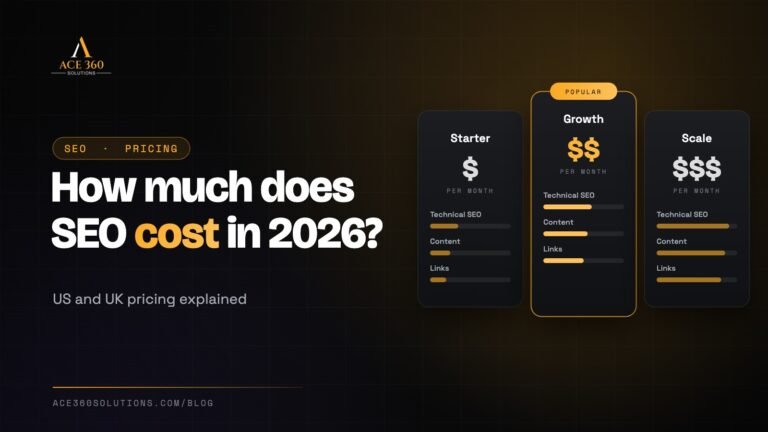
If you are budgeting for this work, our guide to SEO pricing in 2026 shows what agencies typically charge.
Want your business to show up in AI search?
AI search is changing how customers find businesses, but the fundamentals still win: a fast, well structured website, genuinely helpful content and a strong reputation across the web. At Ace 360 Solutions we combine technical SEO, content and local SEO to help businesses grow visibility in both Google and AI search tools. Explore our SEO services and content writing services, or book a free strategy call and we’ll check how your business currently appears in AI search.
Frequently asked questions
Is GEO replacing SEO?
No. GEO builds on SEO. AI tools still rely on websites that are crawlable, trusted and well structured, which is exactly what good SEO delivers. Think of GEO as SEO extended to AI powered answers.
How do I get my business mentioned by ChatGPT?
There’s no guaranteed method, but you improve your chances by having clear, helpful content on your website, consistent business information, strong reviews and mentions on other trusted websites, and a site that search and AI crawlers can access easily.
Do AI Overviews reduce website traffic?
For some informational searches, people get their answer without clicking. But Google has been adding more links inside AI answers, and being cited can still bring valuable visitors. Searches with buying intent, like hiring a service, still often lead to clicks.
How long does it take to appear in AI search results?
It varies. Technical fixes and new content can be picked up within weeks, while building reputation and mentions across the web takes longer. Treat it as an ongoing effort, just like SEO.

admin
Part of the Ace 360 Solutions team — helping brands grow with high-performance websites, SEO and paid media.